Urgent Appeal to save James Broadnax, his execution is scheduled for April 30, 2026
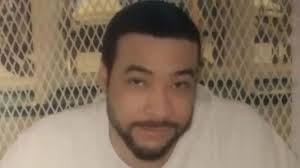
The State of Texas has scheduled the execution of James Broadnax for April 30 at 6:00 PM.
James has spent 20 years on death row in the Polunsky Unit in Texas for a crime he did not commit. The entire case rests on a confession he made while under the influence of drugs and suffering from mental health disorders. The jury was composed of 11 white members and one Black member, and the DNA test did not produce evidence of guilt.
James Broadnax was 20 years old when he was sentenced to death and 19 at the time of the crime. He came from a troubled adolescence marked by abuse. Today, he is no longer the confused young man he once was. Over the long years of incarceration, he has grown into a mature man, receiving significant recognition and being chosen as a mentor to younger inmates.
James’s wife, Tiana, asks us to sign the petitions and writes:
“I will continue to report, to present evidence, to prove and speak the truth. So please help us. James will continue to fight for his life. He feels your love. He appreciates everything you do for him. He loves you very much. He asks you to fight for him and for his life. Thank you for everything you do for us. I only pray that James comes home. That I will not have to bury him. That I will not have to mourn him before his time. Thank you.”
Together with the Community of Sant’Egidio and all those who have stood by James over the years, we launch an appeal to save his life. We ask for clemency for James Broadnax as we pray that his life be spared.
Read the news about the case.
James Broadnax, 38, an African American man, is on death row in Texas following a conviction for a double homicide committed in 2008, when he was 19, linked to a robbery in Garland, Texas. Concerns have been raised about whether the fundamental standards of fairness required in a death penalty case were upheld, including the jury selection process, the way James’s statement was obtained, and the evidence that led to the capital conviction.
Jury Selection Procedures
It appears that Black prospective jurors were removed in a disproportionate manner during jury selection: one Black juror compared to eleven white jurors ultimately served. Under U.S. law, prosecutors are not permitted to exclude jurors on the basis of race. When this occurs, it undermines confidence that the verdict was reached by a fair and impartial jury. Defense counsel raised objections to the jury selection process. The Court granted the motion, ordering the reinstatement of at least one Black juror, thereby effectively acknowledging that racial discrimination had occurred in the selection of the jury.
A Contested Confession
The prosecution relied on statements made by young Broadnax during an interrogation conducted shortly after his arrest, before he had been psychiatrically stabilized, placed on medication, and/or subjected to suicide prevention measures. At the time, he was experiencing severe mental distress, was under the influence of PCP (phencyclidine), a powerful dissociative and hallucinogenic drug, and he informed jail guards that he had suicidal tendencies, hallucinations, and was hearing strange noises. The confession was deemed reliable despite Broadnax’s documented mental illness and his young age. Although mental illness alone does not automatically invalidate a confession, it is a critical factor in evaluating its reliability—especially in a capital case, where the Constitution requires a higher standard of reliability.
Young Age
Broadnax was nineteen at the time of the interrogation. Youth is an important factor in recognizing a state of vulnerability, especially when combined with mental illness and substance use. Young detainees are often less able to assess the consequences of their statements and more susceptible to pressure, increasing the risk of unreliable accounts driven more by distress than by accurate memories.
DNA Evidence Does Not Support the Prosecution’s Case
The forensic DNA testing in this case involved a thorough analysis of the firearm, the victim’s clothing, and other items using DNA typing. The results excluded James Broadnax from the key evidentiary samples, both from the right grip of the firearm and the trigger, and his DNA was also excluded from the victim’s pockets and clothing. The only instance in which James Broadnax was not excluded concerns a low-level mixed DNA sample found on a shoe, but this does not indicate when or how the DNA was deposited. Overall, the DNA evidence does not place James Broadnax in possession of the weapon or in direct physical contact with the victim during the crime. Instead, it weakens the guilty verdict by excluding him from the most important forensic evidence.
Sign the appeal!