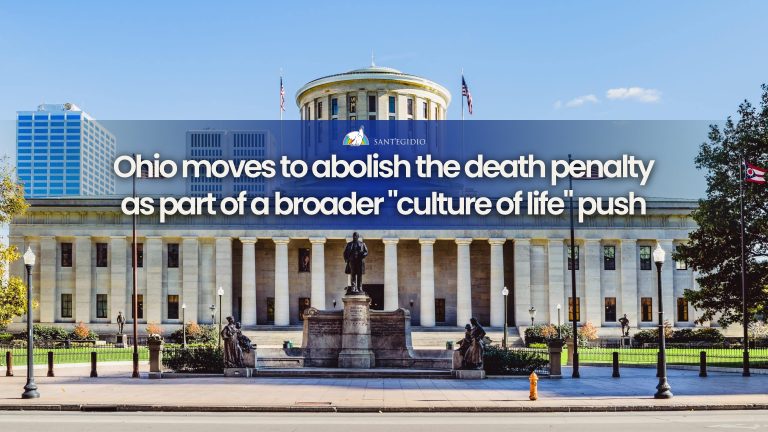
A significant legislative initiative is underway in Ohio that could make it one of the few US states to abolish the death penalty as part of a sweeping affirmation of human dignity at every stage of life. Two companion bills — House Bill 72 and Senate Bill 134 — have been introduced in both chambers of the Ohio General Assembly with the aim of prohibiting state funding for any intentional termination of human life.
What distinguishes this proposal from previous abolitionist efforts is its framing: rather than treating the death penalty in isolation, the legislation links it to a broader “consistent ethic of life,” gathering these three issues under a single statute in the Ohio Revised Code. Supporters argue that the state cannot credibly uphold human dignity in some circumstances while endorsing its violation in others.
“The death penalty is inadmissible because it is an attack on the inviolability and dignity of the person.” — Catechism of the Catholic Church
Legislation at a glance
HB 72
House Bill 72, sponsored by Rep. Adam Mathews (R-Lebanon) and Rep. Jean Schmidt (R-Loveland), introduces the prohibition in the lower chamber.
SB 134
Senate Bill 134, led by Minority Leader Nickie Antonio (D-Lakewood) and Sen. Steve Huffman (R-Tipp City), marks a rare bipartisan effort to end capital punishment in Ohio.
The same legislators are sponsoring also SB133, another Senate Bill for death penalty repeal (in this case, as a stand alone new legislation not regarding a broader defunding framework, so to secure an even broader majority)
The bipartisan nature of the Senate bill is especially noteworthy: it brings together a Democratic minority leader and a Republican senator around a shared moral conviction — that the state should not be in the business of killing, under any legal guise.
On March 25, 2025 — the 30th anniversary of Pope John Paul II’s encyclical Evangelium Vitae — the Catholic Bishops of Ohio sent a formal letter to the General Assembly urging passage of the legislation and calling for the death penalty to be replaced with life without parole.
The Catechism of the Catholic Church, updated in 2018 under Pope Francis, states unequivocally that capital punishment attacks the inviolability and dignity of the person, and that the Church works with determination for its abolition worldwide. The Community of Sant’Egidio continues to monitor this legislative process as part of its global campaign for a world free from the death penalty.